
GDPR and Affiliate Marketing — What You Need to Know
March 13, 2026
•

2 min read
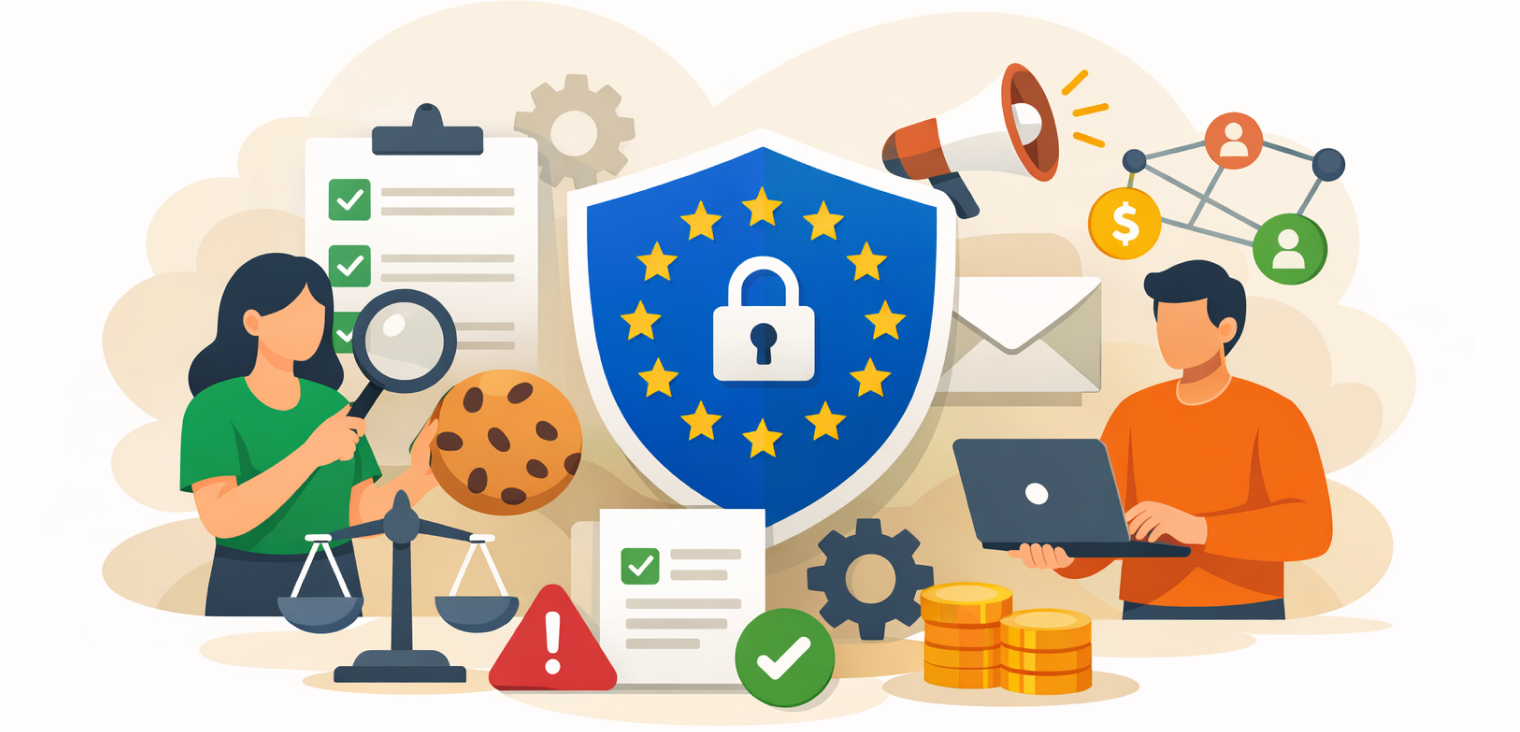
Table of contents
back
to the top
GDPR and Affiliate Marketing — What You Need to Know
Introduction
Affiliate marketing relies heavily on tracking, which means GDPR compliance is critical.
Here’s how GDPR applies.
1. Affiliate Links Often Trigger Tracking
Affiliate programs commonly use:
-
Cookies
-
Pixels
-
Redirect tracking
-
Unique identifiers
All require user consent.
2. Disclosure Is Mandatory
You must disclose:
-
Affiliate relationships
-
Tracking technologies used
-
Data sharing with partners
Hidden tracking is non-compliant.
3. Shared Responsibility Exists
Both:
-
Website owners
-
Affiliate networks
share GDPR responsibility.
4. Consent Must Come First
Affiliate cookies must not fire before:
-
Cookie consent
-
Clear opt-in
5. Cookiepal Protects Affiliate Compliance
Cookiepal ensures:
-
Affiliate cookies wait for consent
-
Categories are accurate
-
Logs prove compliance
Final Takeaway
Affiliate marketing and GDPR can coexist but only with transparency and consent. Cookiepal makes affiliate tracking safe and compliant.
Sources & References
Explore further

How to Prove Consent in a GDPR Audit: Logs, Metadata & Best Practices
How to prove consent in a GDPR audit: required logs, timestamps, user IDs, consent context & withdrawals — plus CMP best practices for audit-ready, exportable records.
October 28, 2025
4 min

The Role of Cookies in Modern Web Security
Ever wondered how cookies really work? Learn the secrets behind online safety and why CookiePal is your go-to for staying compliant.
August 12, 2024
2 min
GDPR Exemptions Explained: When You Don’t Need to Comply
Learn seven GDPR exemptions — when the law doesn't apply or is limited, with practical examples to help businesses spot compliance gaps and avoid unnecessary costs.
August 17, 2025
3 min